
Understanding cyberharassment: warning signs and first steps
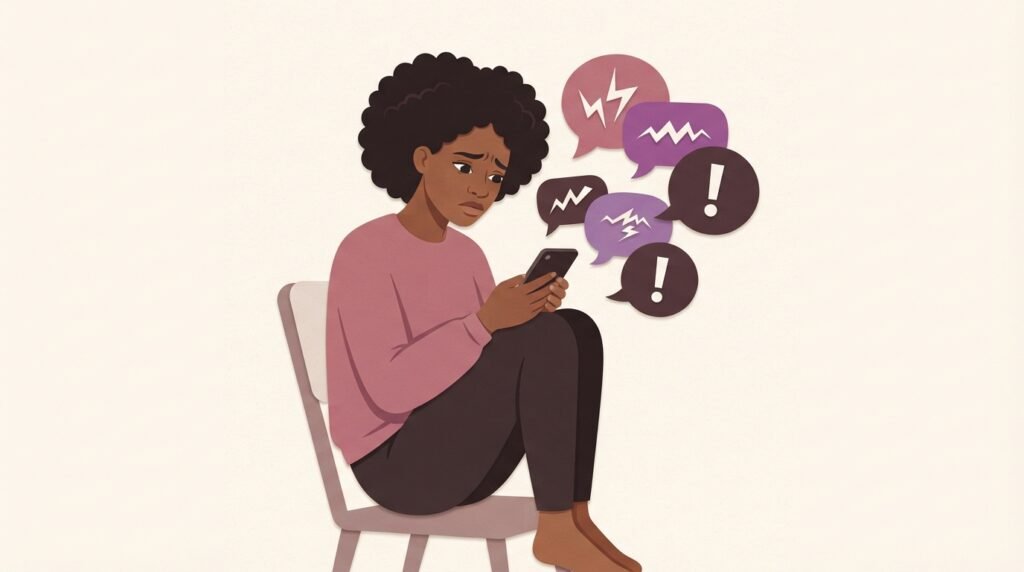
Repeated insults, threatening messages, online exclusion… Cyberharassment affects more and more women in Benin. This article explains how to recognise it, how to respond without panicking, and what remedies exist to protect you.
What exactly is cyberharassment?
We speak of cyberharassment when repeated negative behaviour is directed at a person through digital tools. Repetition is the key: a single hurtful message is not cyberharassment. However, a series of messages, even spread out over time, aimed at destabilising, humiliating or threatening someone, is.
There are several forms of cyberharassment:
- Direct harassment — insulting, threatening or humiliating messages sent repeatedly via WhatsApp, Facebook Messenger, Instagram or SMS.
- Online exclusion — deliberately leaving someone out of groups, blocking them or organising a collective campaign of rejection.
- Cyberstalking — constantly monitoring someone’s posts, movements or online interactions to intimidate them.
- Sharing shameful content — sharing photos, videos or private information without the consent of the person concerned.
- Hacking and impersonation — taking over an account or creating a fake profile to damage the victim’s reputation.
Remember: cyberharassment is never the victim’s fault. Whatever you have posted, shared or said online, nobody has the right to harass you, threaten you or share your private content without your consent.
What are the warning signs to watch for?
Cyberharassment can be hard to identify, especially when it comes from people you know. Here are the most common signs:
- You regularly receive negative, mocking or threatening messages.
- People post hurtful comments on your photos or posts.
- You notice that a group has been created to talk about you negatively.
- Someone shares private photos or information about you without your permission.
- You feel the need to avoid your social media for fear of what you might find there.
- People around you receive messages about you that you didn’t send.
“I thought it was normal to be insulted online. Thanks to Digital Safe Space, I understood that it isn’t. The harasser is always the only one responsible.” — H., 22, Cotonou (anonymised testimonial)
What to do if you are a victim of cyberharassment?
- Don’t reply to the harasser. Replying, even to defend yourself, can encourage the person to continue and fuel the situation.
- Take screenshots. Keep all the evidence: messages, posts, profile names, dates and times. These will be essential if you decide to file a complaint.
- Block and report the account. All platforms have blocking and reporting features. Use them without hesitation.
- Talk to someone you trust. Don’t stay alone with this situation.
- Contact the competent authorities. In case of serious threats or sharing of private content, report the facts to the official services.
Where to call for help in Benin?
- 114 — National Women’s Institute. Support for victims of violence. Free call, 24/7.
- CNIN — plaintes@cnin.bj. Complaints and reports of cyberviolence by email.
How to prevent cyberharassment?
Regularly check the privacy settings of your accounts, limit the personal information visible to the public, and be careful about who you accept into your networks. Talk openly about this topic with your loved ones: the more it is discussed, the less taboo it becomes, and the more victims dare to come forward.